Democracy Is a Verb
This year, the United States turned 250 years old.
Maybe one of the most important things we can think about during this memorable year is that democracy was never designed to be something we inherited, put on a shelf, and dusted off once in a while.
Democracy is a verb because it requires participation: voting, holding power accountable, and helping build what comes next.
It was the 2024 presidential election results that prompted me to start writing these guideposts. I could see and sense the threats our democracy would be facing. Some of you felt similar emotions and had similar thoughts. These guideposts became a beacon for like-minded individuals who needed something to reference as we’ve navigated the past two years.
During that time, voices I follow have been talking about elections, constitutional guardrails, accountability, voter participation, and what happens next. Historian Heather Cox Richardson recently pointed to fractures within the political coalition currently governing the country. As we approach the November 2026 midterm elections, I believe you and I can and will make a difference. I hope it is a BIG difference.
Institutions alone cannot repair themselves. People repair institutions.
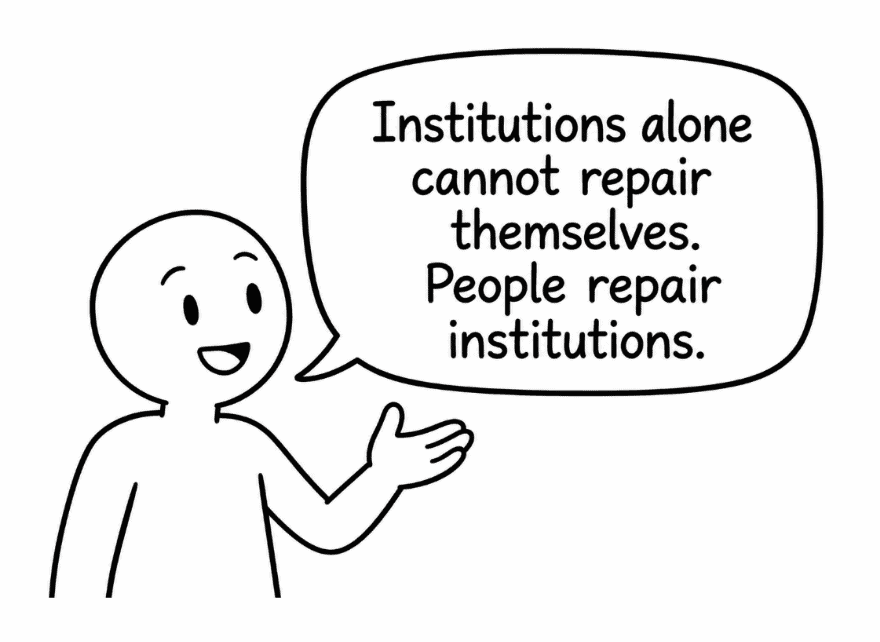
Whatever your politics, there are three basic actions I want to highlight as ways to make a big, productive difference.
1. Use the power you already have: vote
Voting isn’t everything.
Yet, voting is a significant something we can do.
Some will complain that our individual vote is too small to matter. If this is you, please consider the extraordinary amount of money, litigation, organizing, and political energy that surrounds the question of who votes and how elections are administered. Why all the fuss if it doesn’t matter?
Federal law recognizes voting as a fundamental right and says federal, state, and local governments have a duty to promote its exercise.
The first thing I suggest we all do, if you haven’t already, is to check your voter registration. Check it twice, or thrice, and stay on top of being registered.
Then, make a plan:
- Understand the voting rules where you live.
- Know your registration and ballot deadlines.
- Vote early if that option is available to you.
- If possible, help someone else obtain accurate, nonpartisan information about how to participate.
You can find official guidance on how, when, and where to vote through USAGov.
Democracy works best, as we have sadly learned, when well-informed and critical-thinking citizens show up.
2. Don’t confuse an election with the repair: support accountability
An election can change who holds power.
It cannot, by itself, repair damaged institutions.
In September 2026, Gallup reported that 89% of U.S. adults said government corruption was widespread. I share that concern. Concerns about corruption, conflicts of interest, abuse of government authority, and failures of accountability need something more durable than political revenge or retribution.
We need to pursue our concerns by finding the evidence, exercising due process, and upholding the rule of law.
That means supporting strong inspectors general, independent journalism, ethical government, functioning courts, congressional oversight, transparent public records, and state and local institutions willing to perform their constitutional responsibilities.
Accountability strengthens democracy. Simply put:
- If something illegal may have occurred, we must investigate it.
- If evidence supports prosecution, we let the legal system do its work.
- If a law allowed corruption to be possible, we can change the law.
Now is a prime moment to come up with more future-focused solutions, new rules, and new institutions. While we’ve been trying to survive the past two years, politics, economics, military strategy, and global diplomacy have all evolved. We can all benefit from a kinder, wiser perspective and match this evolution with higher levels of insight and hope.
The intention must never be about payback. The intention must be focused on making abuse harder for the next groups or individuals who acquire power.
The intention must be about cleaning up our act and safeguarding our future. We must be thinking, “What comes next?”
3. Start thinking about what we build next
This may be the action I like talking about the most. The marrow inside my bones takes a daily stand for what is possible. I believe with all my heart in progressive evolution that benefits all.
This is a time for all of us to ask ourselves what we are for. We’ve had a lot of time and varied experiences learning what we are not for.
I’ve crafted these questions. I hope they prove beneficial as you think about what we build next:
- What should ethical government look like?
- Where do we need stronger checks and balances?
- How do we protect independent institutions?
- How do we rebuild trust within our nation and globally?
- How do we hold people responsible for their actions?
- How do we make government work better for ordinary Americans, regardless of which party occupies the White House?
Those questions become especially important right before and after an election.
There will be budgets to repair and revise, relationships with allies to amend and revive, laws to reconsider, and enormous disagreements to navigate. There will be public institutions to recover, renew, and strengthen.
This work will require something we can muster from our character.
It will require discernment, courage, accountability, competence, and persistence.
Those happen to be qualities we talk about at SoulSalt Inc. all the time. If you’d like to excavate and find out where you authentically stand on these aspects of character, get a copy of my book. Inside this field guide, you’ll find tools to stand strong, stand in power, and be your most genuine self.
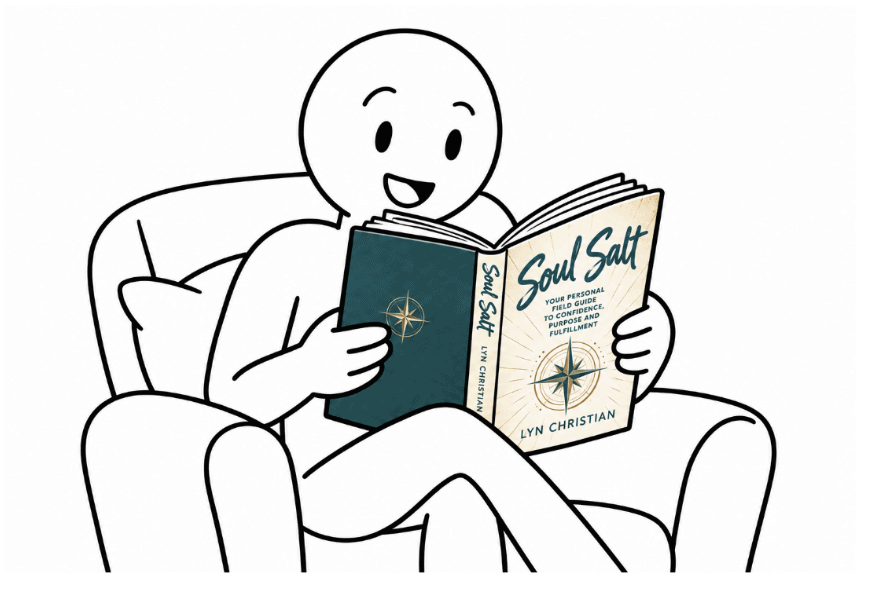
If you want to rediscover what matters most to you, reframe how you see yourself, and fully reclaim your definition of character, this book is for you. When you finish, you will know the Salt of your Soul. You will know how to show up as your best self.
This third point is about building and rebuilding. Maybe that includes rebuilding yourself.
It is a call to stand together with the brave and fearless. We have several daunting tasks before us. We can do them when we stand hand in hand.

Democracy is a verb: something we do
I’d like to frame America’s 250th birthday as an invitation.
The American experiment has never been finished. Every generation inherits parts that worked, parts that failed, and parts that desperately need repair.
Now it’s our turn.
Let’s understand what is happening and what has happened.
Let’s be wise and check the facts.
Let’s participate.
Let’s vote.
Let’s build a future that holds power accountable, whoever possesses it.
Let’s stay involved and help build what comes next.
Let’s teach those who are coming behind us to do the same.
Onward Ho!