After the Votes Are Counted, How Will We Talk to Each Other?
The U.S. midterm elections may be over. Our responsibility to each other isn’t.
Well, here we are.
The midterm elections have come and gone. Some Americans are celebrating. Others are angry, frightened, disappointed, or exhausted. Many of us are wondering what happens next. And plenty of us are wondering how to talk about politics with people who see the world so differently.

Here’s something I’ve learned over decades of coaching leaders, working with human behavior, and studying Conversational Intelligence®:
The quality of our conversations shapes the quality of our relationships, our communities, and ultimately, our future.
That understanding, informed by Judith E. Glaser’s work, feels especially relevant right now. We need to get much better at having difficult conversations, productive conversations, and healing conversations.
Are We Triggering Others or Drawing Them In?
Years ago, I trained in Conversational Intelligence® (C-IQ), developed by organizational anthropologist Judith E. Glaser. Her work helped me understand something that continues to influence how I coach and how I live:
Every conversation has the potential to build trust or trigger fear.
When we feel threatened, attacked, dismissed, or disrespected, we may become more defensive and less able to listen.
Sound familiar?
Consider what happens when someone challenges your political beliefs. Before you’ve even considered their point, your body may already be preparing for battle.
You stop listening. You start constructing your rebuttal. Your curiosity goes out the window.
And the other person? Chances are they’re doing something similar.
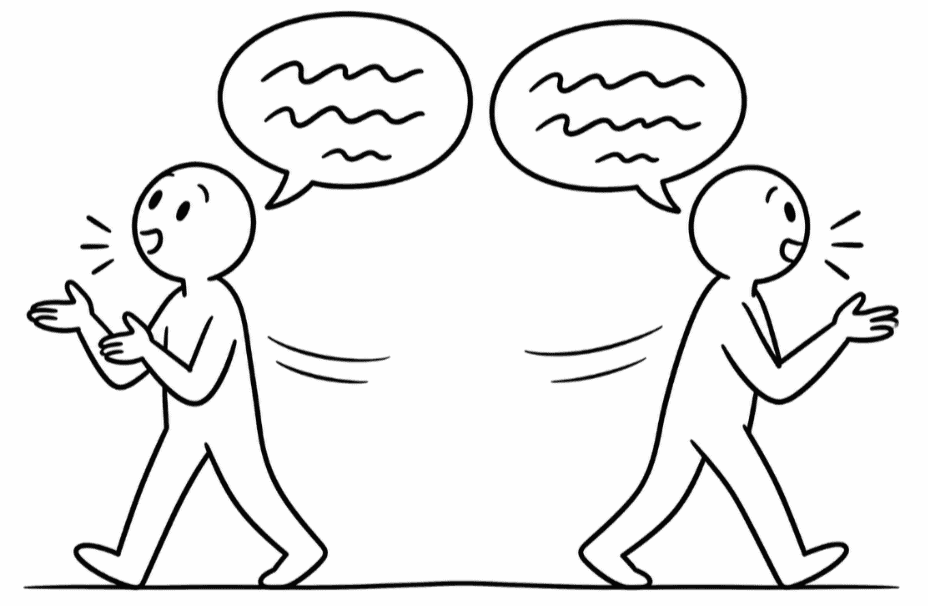
What happens next is two people talking, neither one listening, and little room for anything to change.
That’s not a conversation. That’s a contest, and maybe even a battle.
Understanding the Three Levels of Conversation
Glaser identified three levels of conversation. Understanding them can help us approach political disagreements with greater awareness and intention.
Level I: Transactional: Exchanging Information
At this level, we exchange information, primarily by telling and asking factual questions.
Examples happen on airplanes every day. As we approach our row, we might say to those already settled into the aisle and middle seats, “My seat is by the window.”
Once we’re settled, someone might ask, “Are you headed to Milwaukee for business or pleasure?” A brief exchange of travel plans follows.
Level I conversations are useful. They help us exchange information, establish initial connections, and open the door to deeper dialogue.
A word of caution: When most of our conversations remain at Level I, opportunities for deeper connection can be missed. Use this level as a starting point, not necessarily a destination.
Level II: Positional: Sharing Perspectives
At this level, we share opinions, advocate for our ideas, and sometimes attempt to persuade. We put our perceptions, preferences, and positions on the table while allowing others to do the same.
Back to our airplane.
The person in the aisle seat might say, “I love the walkability and laid-back atmosphere of downtown Milwaukee.”
The middle-seat passenger adds, “There’s a brewery I highly recommend for a meal. I go there every time I visit.”
The window-seat passenger responds, “I’m more interested in exploring the local arts scene. That’s usually how I get a feel for a city.”
Notice the shift: They are moving beyond facts to share their perspectives and reveal what matters to them.

Allowing ourselves and others to place opinions, preferences, and perceptions on the table creates the possibility for a Level III conversation, if we remain open to exploring them together.
Level III: Transformational: Discovering Something New Together
At this level, we move beyond telling and advocating into curiosity, shared exploration, and discovery. We move from an “I” perspective to a “we” way of interacting. We co-create new ideas, solutions, or realizations.
Back on the airplane, the passenger in the window seat becomes curious and asks:
“What is it about a place that makes you feel connected to it?”
The aisle-seat passenger pauses. “Interesting question. I suppose it’s feeling like I belong somewhere, even when I’m just visiting.”
The middle-seat passenger adds, “I’ve never thought about it that way. For me, it’s the people. A great meal is really just an excuse to connect.”
Suddenly, the three strangers are no longer just swapping travel tips. They’re exploring something deeper.
Someone might even ask, “I wonder what would happen if we approached more of our everyday interactions with that kind of curiosity?”
Now they’re thinking together, discovering new perspectives, and potentially changing how they see the world or experience their destination.
That’s the possibility of Level III: We don’t just exchange what we already know. We create the opportunity to discover something we didn’t know before.
And that gives us a way to begin building a better future together.
How to Talk About Politics: Three Practices to Try
There are times when taking a firm position is necessary. Standing up for human rights, protecting vulnerable people, defending democratic principles, and calling out corruption are not things we should ignore.
My hope is that these practices offer a way to make a difference when there is an opportunity for a productive conversation.
You can remain grounded in your values while being curious about another person’s perspective.
1. Regulate Yourself Before You Engage
Before entering a heated conversation, check in with yourself.
Is your body tense? Are you angry? Do you feel compelled to correct, convince, or confront?
Take a moment. Breathe. Notice what your head, heart, and gut are telling you.
You don’t have to enter every argument you’re invited into.
And when you do choose to engage, give yourself enough space to respond thoughtfully.
Look for opportunities to move beyond exchanging facts or defending positions and toward exploring something together. You can invite that shift, even though you can’t control whether the other person joins you.
2. Replace Assumptions With Questions
One of the most powerful things we can do is stop assuming we know why someone believes what they believe.
Try asking:
- “What experiences have shaped the way you see this?”
- “What concerns you most about where our country is headed?”
- “What would you need to see happen to feel more hopeful about our future?”
Then listen.
Listening doesn’t require agreement or surrendering your perspective. It gives you a chance to understand what’s underneath the other person’s position.
Curiosity is powerful. It’s a form of intelligence.
3. Know When to Connect, Challenge, or Walk Away
Not every conversation deserves your energy. Not every conversation can move through the three levels.
Some people are interested in understanding. Others want an audience, an argument, or an opportunity to dominate.
Learn to recognize the difference.
You can say:
“I care about this issue, and I’m willing to discuss it if we’re both willing to listen.”
Or:
“We see this differently. I’m not willing to compromise my values, but I am interested in understanding how you arrived at your perspective.”
And sometimes:
“This conversation isn’t productive or respectful. I’m going to step away.”
Healthy conversations require openness. They also require boundaries and, often, some structure like the practices above.
Democracy Needs More Than Our Votes
Elections determine who holds public office. They don’t determine how we treat one another afterward.
That’s our job.
We can demand accountability from elected officials while remaining accountable for our own behavior. We can challenge misinformation without humiliating people. We can disagree fiercely without automatically dehumanizing one another.
And we can remember that rebuilding trust doesn’t mean abandoning the truth.
It means creating the conditions in which truth can be examined, difficult issues can be addressed, and meaningful action can follow.
The next chapter of our country won’t be written exclusively in Washington, D.C.
It will also be written in our homes, workplaces, neighborhoods, and communities.
One conversation at a time.
Your Invitation
This week, consider one conversation you’ve been avoiding or one relationship that’s been strained by political differences.
Ask yourself:
Am I trying to win an argument, or am I trying to accomplish something that matters?
Then decide whether a more intelligent conversation could make a difference.
You don’t have to agree. You don’t have to tolerate abuse. You don’t have to abandon your principles.
But you do have a choice about how you show up.
Our votes help determine who leads. Our conversations help determine who we become.
Be part of the conversations. Be part of the solutions.