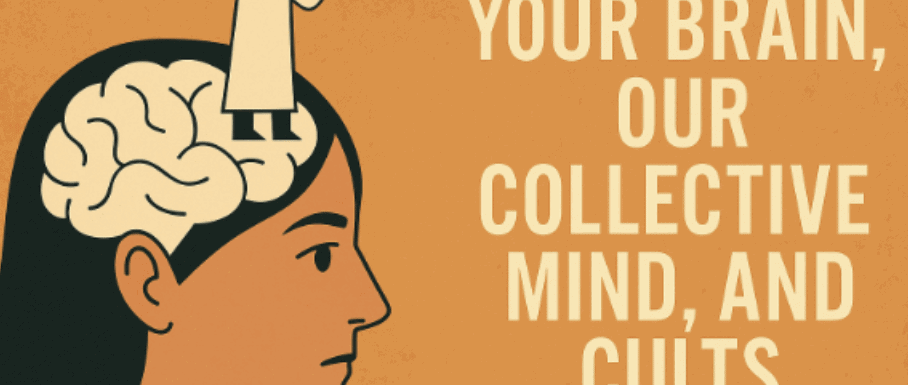
Your Brain, Our Collective Mind, and Cults
I used to wear a charm bracelet filled with emblems from my teen years. Each one was a symbol of milestones I was proud to reach. I also owned a hematite high school class ring, a prized possession I once believed I’d pass down to my future children or grandchildren.
But those treasures are gone. Lost not to theft or accident, but by my own hand. To a version of me that, for a brief but defining season, relinquished my sense of self to an external authority. You see, I used to be religious. Nothing wrong with religion if it’s your path. For me, it eventually stopped working. And before I left it behind entirely, I found myself ensnared in a subset of that organized faith group that carried all the hallmarks of cult-like behavior.
It didn’t last long. Months, not years. But the psychological cost and the regret was significant. I gave away more than jewelry. I gave away my discernment. I handed over my voice, my identity, and my inner knowing. And reclaiming all of that took effort, pain, and awakening.
Why bring this up now?
Because what I’m seeing around us today isn’t just political polarization. It’s mass influence. It’s charismatic figures and media machines using cult-building techniques t0 sow delusion and division. It’s people, good people, being recruited into a belief system that narrows their thinking, erodes critical thought, and weaponizes identity.
We’re all vulnerable. No camp or cause has a monopoly on this. Right, left, spiritual, secular, it’s everywhere. That’s why I want to introduce you to the work of Steven Hassan.
Hassan is one of the world’s foremost experts on cult psychology and undue influence. A former Moonie turned licensed mental health counselor, he developed the BITE model to explain how high-control groups manipulate people:
- Behavior (rigid rules, obedience to authority)
- Information (controlling what is seen, heard, believed)
- Thought (black-and-white thinking, discouraging doubt)
- Emotion (fear, guilt, shame, dependency)
This framework doesn’t just apply to traditional cults. It applies to misinformation bubbles. To charismatic influencers. To political propaganda and even toxic workplaces or relationships.
So how do we protect ourselves and others?
- Self-honesty. We begin by getting brutally honest with ourselves. Where are we outsourcing our thinking? Who are we letting define what is true?
- Critical consciousness. We practice pausing before we react. We notice emotional manipulation, black-and-white narratives, us-vs-them stories. And we question them.
- Reconnection. We reconnect with our SoulSalt, the unique spark of wisdom inside us. We lean into our own values, instincts, and insights. We build support systems that help us think better, not just feel safer.
- Dialogue over dogma. We stop shutting people down. We get curious about our blind spots. We ask better questions. And we create space for nuanced thought instead of echo chambers. Instead of shaming someone caught up in a cult, we listen to these folks and assist them to be heard and understood.
Let me say this plainly:
We are not immune. I wasn’t. No one is. That’s why cultivating soul-led leadership is more important than ever. I work with people who are ready to wake up to their own power, their own truth, and their ability to lead with light.
If you want to be someone who doesn’t fall prey to cultic control… If you want to be someone who builds culture rather than follows one blindly… If you want to be one of the awakened, not the indoctrinated…
Then let’s talk because the world needs clear-eyed, heart-led, SoulSalt-centered leaders right now.
In the meantime, I highly recommend listening to the conversation between Steven Hassan and Monte Mader regarding cults and how to support people out of them.
Resources:
Steven Hassan. Freedom of Mind: Helping Loved Ones Leave ControllingvPeople, Cults, and Beliefs.
Steven Hassan. The Cult of Trump.
Freedom of Mind Resource Center
Hassan, S. (2015). “The BITE Model of Authoritarian Control” – Freedom of Mind