Every Criticism Has a Cost
Criticism has become remarkably normalized.
We see it on social media, in workplaces, in politics, around dinner tables, and, perhaps most painfully, inside our own minds. But what does constant criticism actually cost us?
Habitual criticism can damage relationships, fuel defensiveness and resentment, strengthen our inner critic, and interfere with emotional and spiritual growth. Learning how to stop criticizing ourselves and others doesn’t mean abandoning honesty or accountability. It means replacing reflexive judgment with something far more useful: curiosity, compassion, discernment, and responsibility.
Criticism is one of the most common forms of communication in our world today. The Gottman Institute has written extensively about criticism as one of the destructive communication patterns that can erode emotional safety and intimacy in relationships.
But here’s where I’d like to direct our focus:
How aware are we of the price we pay when we criticize others, and ourselves?
We rarely stop to consider that cost. Every criticism shapes the way we see ourselves, the way we see other people, and ultimately, the kind of people we’re becoming. Left unchecked, habitual criticism can stunt emotional maturity and quietly interfere with our spiritual evolution.
Every criticism has a cost.
Yes, Speak Hard Truths
Before we go further, I want to make an important distinction. I’m not categorizing the act of speaking hard truths when they need to be spoken as criticism.
Honest feedback, accountability, discernment, and healthy boundaries are essential to a meaningful life. There is a difference between saying, “This behavior needs to change,” and communicating, “There is something wrong with you.”
One addresses the behavior.
The other attacks the person.
What we’re talking about here is the habitual pattern of criticizing ourselves, criticizing others, and criticizing life itself as a way of protecting our ego, masking our insecurities, or coping with old wounds.
Criticism may offer momentary relief or a fleeting sense of control. But over time, it can undermine our capacity to heal, connect, and grow. If we truly want a better future for ourselves, our families, our organizations, and our communities, we must first become better stewards of our inner world.
So before we go any further, let’s get honest and curious about our own relationship with criticism.
Self-Criticism Test: A 10-Question Personal Audit
Score each statement:
0 = Rarely or never
1 = Occasionally
2 = Often
3 = Very often
1. When I make a mistake, my first internal response is to judge or insult myself rather than become curious about what happened.
2. I frequently notice what’s wrong with people before I notice what’s good, admirable, or understandable about them.
3. I replay other people’s mistakes, annoying behaviors, or shortcomings in my mind long after the situation has passed.
4. I use sarcasm, teasing, gossip, eye-rolling, or subtle put-downs to express irritation or disapproval.
5. I sometimes feel a sense of relief, superiority, or validation after criticizing another person.
6. I believe being hard on myself helps keep me motivated, disciplined, humble, or successful.
7. When someone behaves differently than I think they should, I have difficulty simply allowing them to be different.
8. I spend meaningful amounts of time criticizing circumstances I cannot control—people, politics, traffic, organizations, culture, or life itself.
9. When I’m disappointed, hurt, embarrassed, or afraid, criticism tends to appear before curiosity does.
10. After criticizing myself or someone else, I generally feel more capable of solving the problem, more connected, and more at peace.
For Question 10 only, reverse your score:
Rarely or never = 3
Occasionally = 2
Often = 1
Very often = 0
Your Score
0–7: Criticism isn’t running the show.
You appear able to distinguish observation and discernment from habitual judgment. Stay awake to the subtler forms of criticism, especially the voice you use with yourself.
8–15: Criticism may be costing you more than you realize.
You may use criticism as a fairly regular strategy for motivation, protection, or emotional release.
Start noticing what happens after you criticize.
Does anything actually improve?
16–23: Criticism has become a pattern.
Your critical voice may be shaping how you experience yourself, other people, and life.
The opportunity here isn’t to criticize yourself for being critical. That would simply add another layer.
Instead, become curious about what criticism is doing for you.
24–30: Criticism may be occupying too much territory in your inner world.
It may have become an automatic way of relating to yourself, others, or circumstances.
Rather than asking:
What’s wrong with me?
Try asking:
What has criticism been trying to accomplish for me?
And then:
Is there a healthier way to accomplish it?
That second question is where the real work begins.
Why Do We Criticize?
If we’re honest, much of our criticism isn’t really about the other person. Sometimes criticism becomes armor.
If I can identify what’s wrong with you, perhaps I won’t have to face what’s frightening, uncertain, or unresolved in me.
Other times, criticism becomes a spear. We use sarcasm, judgment, gossip, or put-downs because, for a brief moment, making someone else smaller can make us feel bigger. Criticism can also give us the illusion of control. If I can label what’s wrong, explain who’s at fault, or decide how someone should be behaving, the world feels a little less unpredictable.
There’s just one problem.
Confidence borrowed at someone else’s expense never lasts.
It always requires another target.
Eventually, the habit of criticism doesn’t just shape how we see other people.
It shapes the person we are becoming.
And that is where the spiritual cost becomes significant.
Why Self-Criticism Can Be So Damaging
The harshest voice we hear usually isn’t someone else’s.
It’s our own.
You’re such an idiot.
That was stupid.
How could you do that again?
You should know better.
Many of us secretly believe this inner dialogue is productive. Somewhere along the way, we learned that if we’re hard enough on ourselves today, perhaps we’ll perform better tomorrow. It’s an understandable strategy. It’s also a deeply flawed one. There is an enormous difference between holding ourselves accountable and holding ourselves in contempt.
Accountability says:
I need to own what happened.
Criticism says:
Something is wrong with me.
Accountability creates the possibility of change.
Contempt creates shame.
Shame may sometimes produce short-term compliance, but shame and self-attack are poor foundations for meaningful, lasting change.
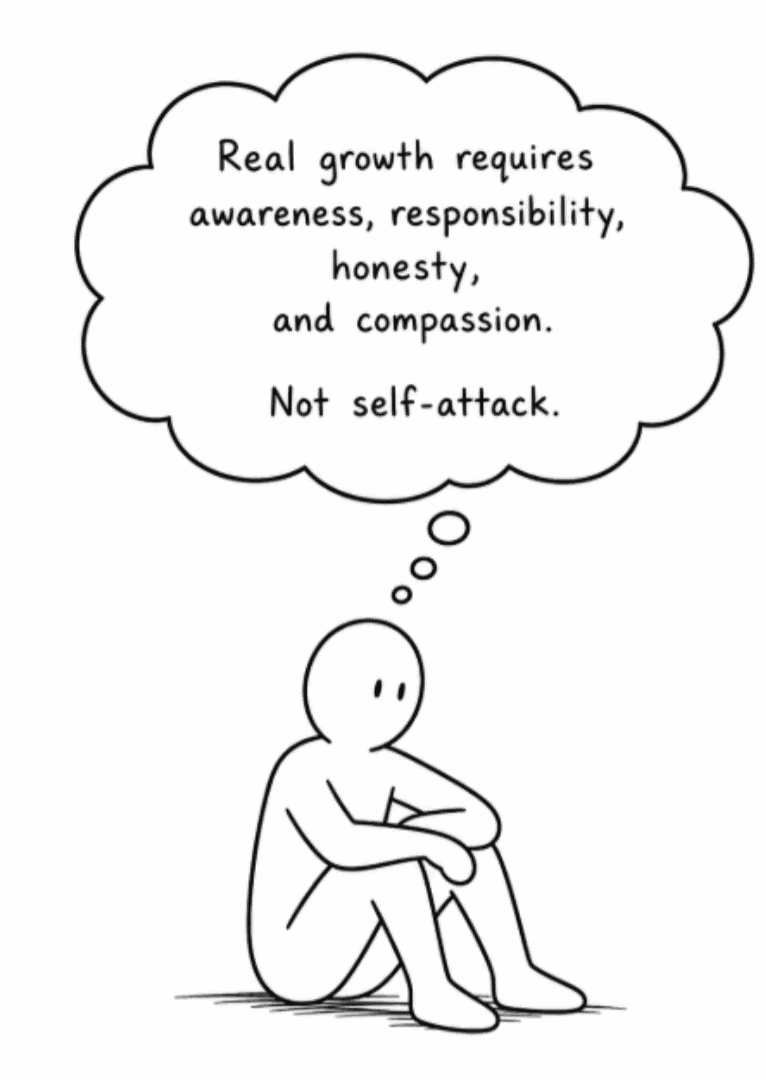
Real growth requires awareness.
Responsibility.
Honesty.
Compassion.
Not self-attack.
Where Does Your Inner Critic Come From?
Here’s another question worth asking:
Is your inner critic even yours?
Many of us learned criticism long before we understood ourselves. Perhaps it came from a parent who believed harshness built character.
A teacher who confused humiliation with motivation.
A coach who believed tearing someone down would somehow make them stronger.
A culture.
A religion.
A workplace.
A relationship.
Over time, those outside voices can become internal ones. Eventually, nobody has to criticize us anymore. We do the job for them. Years later, we may still be speaking to ourselves in ways we would never speak to someone we deeply love.
Part of becoming the author of your own life is deciding which inherited voices deserve to remain.
Every Criticism Resists Reality
The more I’ve watched people grow, the more I’ve noticed something:
Criticism is often resistance wearing a disguise.
When I criticize myself, I may be resisting the reality that I’m imperfect. When I criticize another person, I may be resisting the reality that they’re different from me. When I criticize what has already happened, I’m arguing with a past I cannot change. And when I endlessly criticize life itself, I’m resisting the reality that life rarely unfolds according to my preferences.
Growth begins when we stop wasting energy arguing with, or resisting, reality. Acceptance doesn’t mean approval. It doesn’t mean we tolerate harmful behavior, abandon standards, or stop trying to improve things. It simply means we begin with what is actually true.
And from there, we can decide what to do next.
How to Stop Criticizing Yourself and Others
The goal isn’t to eliminate discernment or never have another critical thought. The goal is to notice when criticism appears and stop using it when something wiser would serve us better.
Here are three practices that can help.
1. Replace Judgment With Curiosity
When you hear yourself criticizing, interrupt the pattern.
Ask:
What’s really happening here?
Then go one layer deeper.
What am I afraid of?
What am I protecting?
What expectation of mine isn’t being met?
What am I actually feeling underneath this criticism?
Curiosity opens doors that criticism tends to slam shut.
2. Replace Contempt With Compassion
Compassion means refusing to use cruelty as a growth strategy.
You can say:
I shouldn’t have done that.
Without saying:
I’m an idiot.
You can say:
That behavior isn’t acceptable to me.
Without deciding:
You’re a terrible human being.
You can hold yourself accountable without hating yourself. You can disagree with another person without diminishing their humanity. You can have standards without contempt.
That, my friend, is emotional maturity.
3. Ask the Question That Changes Everything
When criticism arises, ask:
What would actually help here?
It’s a remarkably clarifying question.
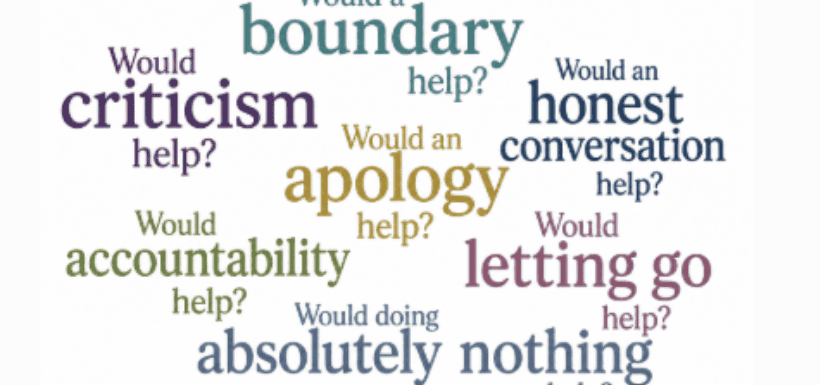
Would criticism help?
Would curiosity help?
Would a boundary help?
Would an apology help?
Would an honest conversation help?
Would accepting something you cannot change help?
Would changing your own behavior help?
Would simply letting it go help?
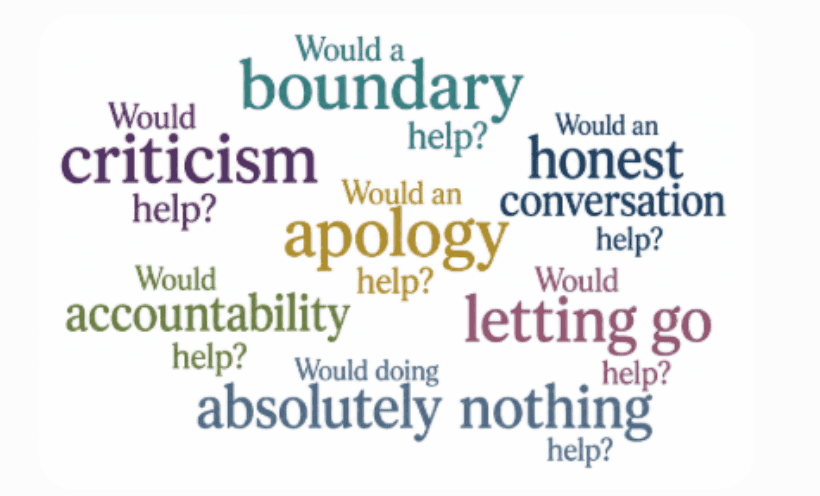
You don’t need to answer all of those questions. Answer just one, and you may have your next right step.
How Do You Stop Being So Critical?
Start by noticing criticism without criticizing yourself for having it. That matters. If your response to discovering that you’re overly critical is to become even more critical of yourself, you’ve simply created another layer of the same problem.
Instead, notice the pattern. Become curious about what is underneath it.
Then begin replacing judgment with curiosity, contempt with compassion, and the question “What’s wrong?” with a far more useful question:
“What would actually help here?”
The goal isn’t perfection. The goal is awareness.
Because once we can see the pattern, we have a choice about whether we continue it.
A Closing Thought
Personal growth happens moment by moment. In any moment, you and I can choose curiosity over judgment.
Compassion over condemnation.
Accountability over shame.
Reality over resistance.
Each time we make one of those choices, we create space for something wiser to emerge. We create room to heal, connect, mature, and spiritually expand. And perhaps that is the hidden opportunity inside every critical thought. Before we send it outward, or turn it inward, we can stop and ask:
What would actually help here?
Answer that question, and you may have just found your next right step.