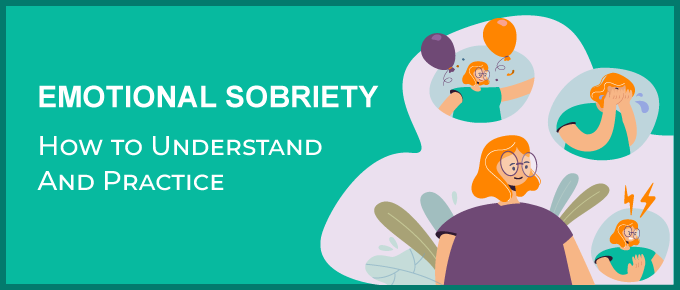
You know the feeling. You’re stressed and worked up. Your mind keeps tugging you back to the same issue over and over again. You feel out of touch with your most authentic bad-ass self.
You can feel yourself becoming shrouded by worry, anger, or sadness.
When you’re in this place, chances are, you’re emotionally intoxicated.
Yep, you really can get drunk on negative thoughts – and the side effects can be damaging.
However, like anyone trying to break a habit, there is a solution – learning to practice emotional sobriety.
What Is Emotional Sobriety?
Emotional sobriety is synonymous with emotional intelligence or emotional regulation.
It’s about learning how to navigate and respond to difficult emotions as they arise, so you can take control of your life and step into your most authentic, fulfilled, loving, and confident self.
It’s hard work, but the effort is well worth the reward.
You see, our brains can easily become addicted to repetitive but harmful thought patterns. In fact, as research about the stress response from Harvard Medical School Research notes, they’re actually wired to.
Fight or Flight
When we feel scared, upset, or hurt, the neurons in our brain fire up and trigger a fight-or-flight response.
While this primitive mode of operation helped us avoid danger and being hunted by predators, today it means our brains often perceive threats in the environment that aren’t there.
So, when we get stressed out at work, or about money or our relationships, our minds and bodies respond with the same kind of intensity that they would to, say, being chased by a lion.
Unfortunately, getting out of this mode is a lot harder than slipping into it.
When we’re in this fight-or-flight state, we can’t think clearly. Instead of approaching life from a place of intuition, compassion, and curiosity, we become highly reactive, fearful, and egocentric.
Now, if this sounds familiar to you, I don’t want you to beat yourself up about it. Our brains are programmed to behave in this way, and we have little control over the emotions that visit us.
However, what we do have control over is how we respond to those thoughts and feelings.
Rather than sinking into the stress response, we have the power to level up and take charge of our lives. And that’s where the practice of emotional sobriety comes in.
What Are the Characteristics of Emotional Sobriety?
Countless studies show that emotional sobriety directly correlates with success, happiness, and even wealth. But what does emotional sobriety look like in practice?
Here are the key characteristics:
1. Acceptance
Let Go of Things You Can’t Control
When you’re emotionally intoxicated, you’ll likely spend a lot of time dwelling on things you can’t control but would like to change.
Needless to say, this is a waste of valuable time and energy. After all, what other people think and choose to do is totally beyond your power!
Emotionally aware people know this and, instead of getting worked up over things that they can’t influence, they focus on the things they can control, like living true to themselves and their core values.
2. Emotional Intelligence
Individuals adept at emotional sobriety experience negative emotions just like everyone else.
What makes them badass is their ability to notice and regulate these feelings. For example, let’s say they have a huge presentation at work coming up. Like all of us, they’re going to feel a little nervous.
The difference is that, instead of catastrophizing about the looming presentation and making themselves feel even more anxious, they notice their emotions.
They choose healthy ways to self-soothe, such as thinking positively, reminding themselves of the bigger picture, and engaging in activities they enjoy.
3. Resilience
Prolonged periods of emotional intoxication can really damage self-esteem.
Get in Control
When your emotions control you more than you control them, your tolerance for uncertainty, challenges, and new situations dramatically reduces.
On the other hand, when you master emotional sobriety, you become much more resilient in the face of the unknown. Rather than being guided by self-limiting beliefs, you’ll feel compelled to try new things, follow your dreams, and unlock your full potential.
Instead of feeling threatened by failure, you’ll see new experiences as opportunities to learn, grow, and find your purpose.
4. Mindfulness
Stress can seriously hijack any sense of stillness and inner peace.
Emotional intoxication sends you into a mindset that limits you from being fully present, where your mind spouts all sorts of unhelpful stories that steal you from the here and now.
Emotional sobriety enables you to reclaim your stillness. Instead of getting lost in your thoughts, you learn how to clear your head, reconnect with your intuition, and take control of your emotions with clarity.
5. Creativity
Did you know that stress directly hampers our creativity? When we’re in fight or flight mode, we’re cut off from all the beautiful things that make us human – our creativity, wonder, empathy, and core values.
Stress Kills Creativity
When we’re in fight or flight mode, we’re cut off from all the beautiful things that make us human – our creativity, wonder, empathy and core values.
Thankfully, when we learn how to practice emotional sobriety, we get to reconnect with our most authentic selves. You’ll no longer spend your time dwelling on negative occurrences. Instead, you’ll start to think and act from a place of expansive openness, love, and self-respect.
How to Practice Emotional Sobriety
Now that you know what emotional sobriety looks like, it’s time to learn to walk the walk and talk the talk.
But, before we dive in, I want to emphasize that nobody is emotionally sober 100% of the time. Life is full of ups and downs, and even the most self-aware people get sidetracked by negative moods sometimes.
The trick is to catch these feelings and regulate them as soon as you can. Here’s how to do it in six steps:
Step 1: Learn to Tell When You’re Emotionally Intoxicated
The first step towards emotional sobriety involves becoming more in tune with your mind and body. Basically, you’ll want to learn how it feels when you’re emotionally triggered.
Now, emotional intoxication feels different for everyone. Some people brood and shrink into themselves. Others start to act ‘holier-than-thou’ and rant to anyone who will listen. Many may feel incredibly anxious or low but not know why. In fact, for you, it could even be a combination of all three and then some!
The Underlying Theme is the Same
You feel stressed and disconnected from your soul, and you start to see the world in black-and-white terms.
Step 2: Understand What Triggers You Into an Emotionally Intoxicated State
Once you have a good idea of what emotional intoxication feels like for you, the next step is beginning to understand your triggers.
Who did you see and what happened when you felt yourself start to get more and more stressed?
Notably, this step is definitely not about blaming the people around you for how you feel. It’s more about learning to predict what kinds of situations might send you into fight-or-flight mode.
A great way to help with this exercise is to embark on a regular journaling practice. Journaling can be a super tool for detangling problems and understanding yourself better.
Ask yourself: Where do these emotions come from? Can you find a link between how you feel now and something you experienced in your past? Do you have wounds that still need healing?
By becoming more self-aware, you’ll be better equipped to manage challenging emotions as they come up.
Step 3: Notice the Stories You Tell Yourself
Emotional intoxication is almost always prolonged by unhelpful thoughts. When we’re dysregulated, we tend to tell ourselves all sorts of troublesome stories about what’s happened in the past or what might happen in the future, which makes us even more stressed and keeps the thinking addiction going.
For example, if you’re worried about what your boss thinks of your performance, you might create a narrative in your head about what they’re saying to the leadership team, and then even worry about whether or not you’ll get a promotion, and if you’ll be able to afford rent next year! Quickly, you can see how emotional intoxication can spiral out of control.
So, as part of your journaling practice, start to write down and notice the stories you make up in your head that contribute to your negative state. Once you’ve done that, it’s time for the next step.
Step 4: Practice Emotional Regulation
Now that you’re aware of all the mind chatter that goes on in your head when you’re emotionally intoxicated, you can start to create space between yourself and your thoughts.
Instead of reacting to your emotions and the stories your mind is conjuring up, take a second to acknowledge the feelings you’re experiencing.
Then, it’s time to consciously respond – choosing a next step that aligns with your values and your vision of the person you want to be. For example, if one of your values is compassion, then speak to yourself kindly and be respectful of the other people involved in the issue.
Now, I’m going to be honest with you – this step is tough. Our thought patterns can get pretty entrenched, and our minds will try and keep pulling us back to our unhelpful thoughts. When this happens, another trick I’ve learned is to play the 5-4-3-2-1 game. It goes like this:
Stop whatever you’re doing, look around, and identify:
- Five different colors
- Four different shapes
- Three different textures
- Two things made by humans
- One representation of an animal or an actual animal
Once you’ve done this, focus on your breathing and stay in the present moment. Taking this break from thinking helps you to recalibrate your emotions back to baseline, so it’s easier to regulate them.
Step 5: Let Go of Perfectionism
To boost your emotional sobriety practice, it’s imperative to start believing in yourself. This means honoring your personal philosophy, having reasonable expectations of yourself and others, and understanding that life isn’t perfect.
You Can’t Change Others
Emotional intoxication centers around wanting to change other people’s thoughts and actions – whether someone likes you, whether you agree with their behavior, etc.
But the thing is, we have no control over how other people perceive us. None at all. All we can do is focus on being the best version of ourselves.
When negative emotions get the better of you, remembering this can be really liberating.
Learn to Gauge Your Emotional Sobriety
If you’ve read my new book, you’ll know that I believe defining your own success is crucial to living out your purpose. By this, I mean setting out meaningful metrics that help you along the path to fulfillment and authenticity.
If this article has struck a chord with you, you may want to add emotional sobriety into your formula for measuring success.
I recommend checking in with yourself every week or every month to see how you’re getting along. Here are some ideas to get you started:
- Am I getting better at responding to negative emotions instead of reacting?
- Do I feel more confident and comfortable in my own skin?
- Am I navigating occasions I previously found challenging with more ease?
- Do I feel more aligned with my intuition?
Ready to Reach Your Full Potential?
If you’re starting your journey towards emotional sobriety, and want a helping hand along the way, my Bring Your Best Self Master Class is for you.
This 9-month coaching program will help you skyrocket your emotional intelligence, find your why, define and achieve your long-term goals, and, ultimately, plot a roadmap to reaching your full potential – as you.

